
Cabbage From China Was Laced With Formaldehyde. U.S. Consumer Trust in Kimchi Now Faces a Test

Following the news of the scandal, unclear cabbage sourcing and limited routine testing may leave American consumers with more questions than answers.

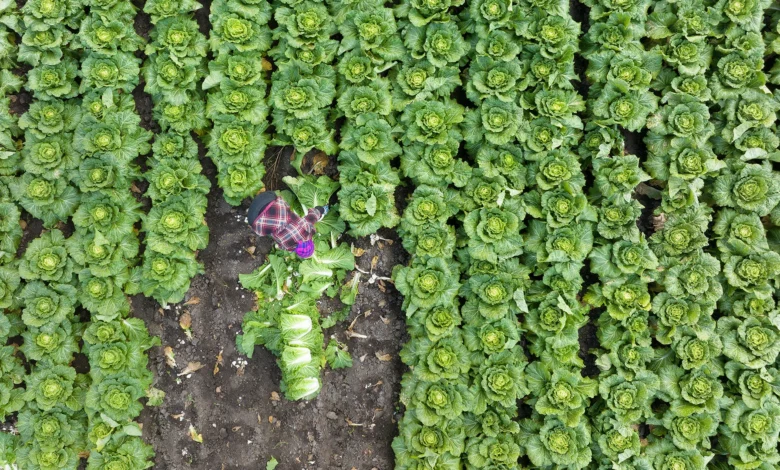
Chinese cabbages in Shuangyashan, Heilongjiang Province of China. Photo:
Kimchi has spent years building a fast-growing following in the U.S. Now a food safety scandal in China involving formaldehyde-treated napa cabbage will test whether that appetite can survive the headlines.
According to The Korea Times, Chinese authorities recently confirmed that napa cabbages were illegally soaked in a solution containing formaldehyde, a chemical classified as a human carcinogen, to keep them fresh during transportation. The discovery has since prompted an investigation and efforts to trace where the affected produce ended up.
The case quickly raised concerns about kimchi, since
The case quickly raised concerns about kimchi, since napa cabbage is typically its main ingredient. Most commercial packaged kimchi consumed in the U.S. is either produced domestically or imported directly from South Korea and China.
Seockmo Ku, PhD, an assistant professor in Texas A&M’s Department of Food Science and Technology, told Inc. that formaldehyde used to keep produce fresh likely wouldn’t produce a visible defect, and at low levels, wouldn’t be reliably detected by taste, smell, or appearance either, especially since kimchi’s own strong aromas can mask subtle differences. While lab testing can detect it, he said, results depend on proper sampling, since contamination isn’t always evenly distributed.
Refreshed leadership advice from CEO Stephanie Mehta
An Inc.com Featured Presentation
How Kimchi grew in popularity among U.S. consumers
Kimchi has enjoyed unprecedented visibility among American consumers in recent years, popping up everywhere from major grocery chain shelves to burgers, tacos, and other dishes far removed from traditional Korean cuisine.
Earlier this year, it earned a spot
Earlier this year, it earned a spot as a “gut health” food in the 2025-2030 Dietary Guidelines for Americans, issued jointly by the U.S. Department of Health and Human Services and the U.S. Department of Agriculture.
However, for U.S. shoppers, tracing exactly where the cabbage in a particular jar of kimchi comes from isn’t always straightforward. Some brands are labeled as imported directly from a specific country, while others don’t specify a country of origin at all—leaving consumers with little way to know whether this specific controversy has any connection to what’s sitting on their own shelf.
Source: www.inc.com